
THE TROUT STOCKING PROGRAM ON THE CHATTAHOOCHEE TAILWATER
A River Made for Trout
I want to start by telling you something that surprises a lot of people when they hear it for the first time. The Chattahoochee River below Buford Dam is not a natural trout fishery. It was engineered into one. Before the Corps of Engineers finished Buford Dam in 1956 and Lake Lanier started filling up, this stretch of the Chattahoochee was a warm-water river. Bass, catfish, bream — the same fish you’d expect in any Georgia piedmont river. Trout had no business being here, and they weren’t.
The dam changed everything. Cold water drawn from the deep bottom of Lake Lanier now flows out of that dam year-round, keeping the river cold enough to support trout even in the brutal heat of a Georgia August. What was once a warm-water fishery became one of the most productive trout tailwaters in the entire Southeast. That transformation was not an accident. It was the result of intentional management, decades of stocking effort, and a partnership between state and federal agencies that continues to this day.
I’ve fished this river for more years than I can count, and I never take for granted what it took to build this fishery. Understanding where these fish come from makes you a better angler and a better steward of the resource.
How It All Started
When the dam went up and the cold water started flowing, fisheries managers recognized the opportunity almost immediately. Cold water meant trout water, and trout were stocked into the tailwater not long after the dam was completed. The fishery grew slowly at first. Early management was pretty rudimentary by today’s standards. Old-timers who fished the river back in the 1970s talk about actual checking stations at bridge crossings where DNR personnel would count and record your catch. It was a different era, and the river was producing a fraction of what it does now.
The real turning point came in 1996 when the river below Buford Dam was opened to year-round trout fishing. That policy change recognized what the cold-water release makes possible — consistent trout habitat in every season. Since then, the fishery has only gotten better managed and better stocked. Today this tailwater is believed to receive more angling pressure than any other trout stream in Georgia, and it earns every bit of that attention.
Where the Fish Come From
Two hatchery facilities are responsible for the vast majority of trout that end up in this river, and both of them are worth knowing about.
The first is the Buford Trout Hatchery, operated by the Georgia Department of Natural Resources Wildlife Resources Division. It sits right on the banks of the Chattahoochee in Forsyth County, just downstream of the dam. That location is not a coincidence. The hatchery pumps its water directly from the river below the dam and returns all of it back to the river when it’s done. At any given time, the facility is raising up to half a million trout — both brown and rainbow — at various stages of development. The proximity of this hatchery to the stocking locations is one reason this stretch of river gets topped off with fresh fish so consistently. If you’ve never visited, it’s worth the trip. It’s open to the public for self-guided tours, and you can walk the Bowman’s Island trail around its perimeter and fish the river right behind the facility.
The second facility is the Chattahoochee Forest National Fish Hatchery, run by the U.S. Fish and Wildlife Service up in the mountains of north Georgia near the Toccoa River. This federal operation produces roughly a million trout per year and stocks them into tailwaters, streams, and lakes across northern Georgia in partnership with the DNR, the Forest Service, the Army Corps of Engineers, and the Tennessee Valley Authority. It’s a significant operation, and the federal involvement in this fishery is something Georgia anglers benefit from enormously. The reality is that roughly nine out of ten trout caught in Georgia started their lives in the federal hatchery system, either as an egg, a fingerling, or a stockable-size fish.
The trout start as fertilized eggs or small four-inch juveniles and are raised to catchable size before being loaded onto trucks and delivered to the river. When one hatchery is running low on a particular species or size class, other facilities in the network can fill the gap, which keeps the stocking program consistent even when individual hatcheries face production challenges.
What Gets Stocked and Where
The stocking program on the tailwater centers on two species — rainbow trout and brown trout. You will not find brook trout below Buford Dam. Brooks are the only trout native to Georgia, but they belong to the high-elevation headwaters above Helen, not to a big piedmont tailwater. They don’t compete well with other trout species, and the tailwater is not their habitat.
Rainbows make up the bulk of what gets stocked. They’re hardy, aggressive, and will hit an artificial lure or fly with minimal coaxing. Most of them come out of the truck at nine to eleven inches — what the DNR calls catchable size — and they provide immediate action for both wading anglers and bank fishermen. Rainbows do not reproduce naturally in the tailwater in any meaningful numbers, which means the rainbow population you’re fishing is almost entirely a product of the stocking trucks. When you catch a rainbow here, you’re benefiting directly from the program.
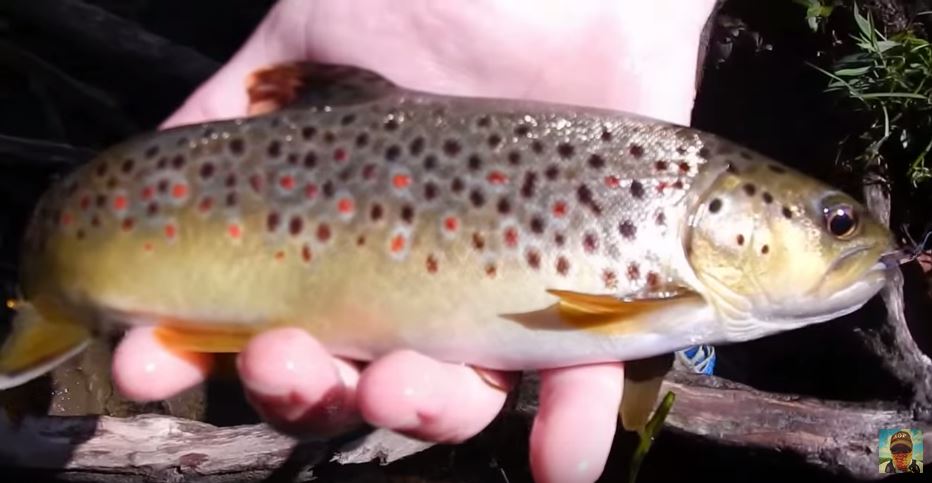
Brown trout are a different story, and honestly, they’re the reason this river keeps me coming back. Browns are stocked too, but they’re far better suited to surviving and growing in a tailwater environment. They’re more cautious, more selective, more nocturnal, and harder to catch. A higher percentage of them escape angling pressure long enough to put on serious size. What’s developed over the decades is a self-sustaining population of trophy-size wild brown trout — fish that came from stocked origins but grew up in the river, learned it, and in some cases are reproducing in it. When you hook a brown trout on the Chattahoochee that goes twenty inches or better, you’re likely looking at a fish that has spent years in this river. Those fish are the crown jewels of this tailwater.
The brown trout strain used in the program has historically been the Walhalla strain, obtained from South Carolina. Different strains of trout behave differently in terms of growth, survival, and how susceptible they are to angling, so strain selection is not a trivial decision for fisheries managers.
Statewide, the DNR stocks roughly 1.1 million trout per year across all of Georgia’s designated trout waters. Nearly a quarter of those fish go into the Chattahoochee below Buford Dam. Think about that for a moment. One river section receives twenty-five percent of the entire state’s stocking allocation. That tells you everything about how heavily this water is fished and how seriously the DNR takes it as a resource.
The distribution of fish is not uniform along the tailwater. The section between Buford Dam and Morgan Falls Dam gets the heaviest concentration of catchable-size fish — nine to ten-inch fish ready to catch the moment they hit the water. Below Morgan Falls, the program shifts toward fingerlings: about 100,000 tiny two- to three-inch brown and rainbow trout released each year to grow out in the lower river. Those fingerlings won’t be in your net this weekend, but they’re part of the long game, building the wild brown trout population in the lower tailwater over time.
Year-Round Stocking
One of the things that sets this river apart from virtually every other trout fishery in Georgia is the year-round stocking schedule. Most of Georgia’s trout streams receive fish from March through mid-September and then go dormant for the winter as far as stocking is concerned. The Chattahoochee tailwater runs cold enough year-round that trout can survive in any season, so the stocking program runs with it. There is no real off-season here.
The frequency of stockings in any given stretch is driven by fishing pressure, public access, and water conditions. Because so much of this tailwater runs through the Chattahoochee River National Recreation Area — federally managed public land with extensive bank and wading access — it qualifies for the highest stocking frequencies the program offers. High access equals high pressure equals more fish. That formula works in the angler’s favor on this river.
If you want to fish the river at its best, pay attention to the Georgia DNR’s weekly stocking report. It’s available online through the GeorgiaWildlife website, and they also offer a weekly email notification you can subscribe to. Fresh stockings mean fish that have had a day or two to settle into the river and start feeding but haven’t been pounded by every angler in the metro area yet. That two- to four-day window after a stocking can be exceptional fishing.
How Many Fish Are Actually in This River?
The DNR has conducted population surveys on this river over the years, and the numbers are eye-opening. A study conducted in September 1998 found nearly 5,800 trout per river mile across 31 miles of tailwater between Buford Dam and Roswell Road. By November of that year the number had dropped to around 4,500 per river mile, and by the following February it was down to about 1,800. That winter mortality is significant, but even the February number represents an extraordinary density of trout for a river of this size and location.
What those surveys couldn’t fully determine was how many of those overwintering fish were stocked rainbows versus wild brown trout. That distinction matters because it speaks to whether this fishery is truly self-sustaining in any portion or entirely dependent on the hatchery trucks. The evidence suggests the answer is both — a robust stocking program supporting a high density of catchable rainbows, overlaid on a growing wild brown trout population that doesn’t need a truck to thrive.
The Delayed Harvest Section
If you haven’t fished the delayed harvest section of the lower tailwater in winter, you’re missing something special. The section from Sope Creek downstream to U.S. Highway 41 at Cobb Parkway operates under catch-and-release regulations from November 1 through May 14. During that window, the regulations require single-hook artificial lures only. No harvest is allowed.
What this means in practice is that fish are stocked into this section throughout the fall and winter and accumulate without being killed. By late winter, you’re fishing water that has received multiple stockings and where every fish that was caught was put back. The catch rates in a well-maintained delayed harvest section are among the highest you’ll find anywhere on the river, and the fish are often in better condition and holding in more natural feeding lies than freshly stocked fish upriver.
There is a caveat. The delayed harvest section on the Chattahoochee is more susceptible to disruption than the upper tailwater because it sits below Morgan Falls Dam, and high-water events related to dam operations at either Morgan Falls or Buford Dam can make stocking impossible and the river unfishable. The DNR has occasionally had to delay or cancel stockings in this section due to high flows. Always check current conditions and stocking status before making the drive down to the lower river in fall or winter.
Regulations You Need to Know
I want to be direct about the regulations because I see anglers get caught off guard by them regularly.
The artificial lures only restriction applies to the stretch from Buford Highway (Highway 20) down to Medlock Bridge. No bait fishing, no PowerBait, no corn, no live or dead bait of any kind. Artificial lures only. That regulation exists to protect the fish population in one of the most heavily pressured stretches of the entire tailwater.
Fishing hours throughout the tailwater from Buford Dam to Peachtree Creek are restricted to thirty minutes before sunrise until thirty minutes after sunset. There is no night fishing on this river. You are limited to one hand-held pole and line. Live fish cannot be used as bait anywhere on a designated trout stream.
You must have both a valid Georgia fishing license and a Georgia trout license to fish for trout here. If you catch a trout and you don’t have a trout license in your pocket, you must release it immediately. Check your paperwork before you get in the water.
Why This Program Matters
I think about this sometimes when I’m standing knee-deep in the tailwater watching the mist come off the river in the early morning. The fact that I can drive thirty minutes from the north Atlanta suburbs and stand in a river catching genuine trout is not something that happens by accident. It is the product of sustained investment, smart management, and the license fees that anglers pay year after year.
Trout fishing in Georgia generates over $172 million in economic activity annually. More than 100,000 trout licenses are sold each year in this state. That money flows back into the hatcheries, the stocking trucks, the habitat surveys, and the stream restoration work that keeps rivers like this one healthy. Every license you buy is a direct investment in the fishery you’re fishing.
The Trout Unlimited specialty license plate is another way Georgia anglers contribute. The money from those plate sales goes directly to trout feed, hatchery equipment, and stream restoration projects. If you fish this river and you don’t have one on your bumper, I’d encourage you to think about it.
The Bottom Line for Anglers
Here is what all of this means for your time on the water. There is no bad season to fish the Chattahoochee tailwater below Buford Dam. The cold water and the year-round stocking program together guarantee that trout are present in every month of the year. The densest concentration of fresh fish is between the dam and Morgan Falls, and the weekly stocking reports will tell you exactly when that section was last topped off.
If you want numbers, fish the upper tailwater after a recent stocking and work a stretch of river that gets regular angling pressure — those fish are conditioned to respond to standard presentations. If you want a trophy brown trout, fish the lower tailwater in low-light conditions, think like a predator not a put-and-take angler, and be patient. Those big browns are in there. I’ve seen them and caught them, and every single one of them was worth every hour I spent figuring out how to make it happen.
This stocking program is the engine that drives everything on this river. Everything else in this guide — the access points, the tactics, the hatches, the gear — is built on top of the foundation these hatcheries and these biologists have been laying for the better part of seventy years. Respect that, fish ethically, and this river will reward you for a lifetime.