ABOUT THIS BLOG AND THE MAN BEHIND IT
My name is Nick Adams, and the Chattahoochee River is in my blood.
I was born at Northside Hospital in Atlanta, which puts me about as close to this river as you can get without being born on its banks. Some kids grow up near the ocean, some near the mountains. I grew up near the ‘Hooch, and from the time I was old enough to be pointed toward moving water, that is where I wanted to be. Fishing its banks as a kid. Tubing through its shoals as a teenager. Wading its tailwater as a young man learning to fly fish. Paddling its entire length in a kayak as someone who simply cannot get enough of what this river offers. The Chattahoochee River has been the constant thread running through my entire life, and this blog is my attempt to give something back to a river that has given me so much.
About this blog.
After 40+ years of Chattahoochee River Adventures, it’s time to talk about the Hooch! Whether you are a seasoned fly angler who has been fishing the tailwater for twenty years and just wants a few new pieces of information, a complete newcomer who discovered the river last summer and wants to understand what you have stumbled into, a kayaker looking for access points and paddling routes, a hiker exploring the CRNRA’s trail system for the first time, a parent looking for ways to introduce your kids to the outdoors close to home, or simply someone who drives over this river twice a day and has always wondered what is actually going on down there — this blog is for you.
A Lifetime on the Water
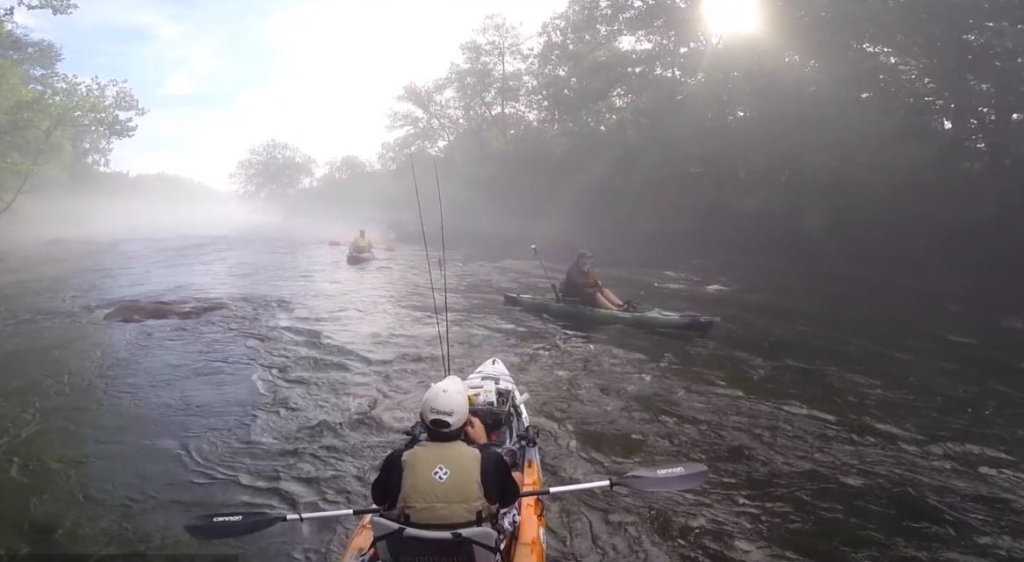
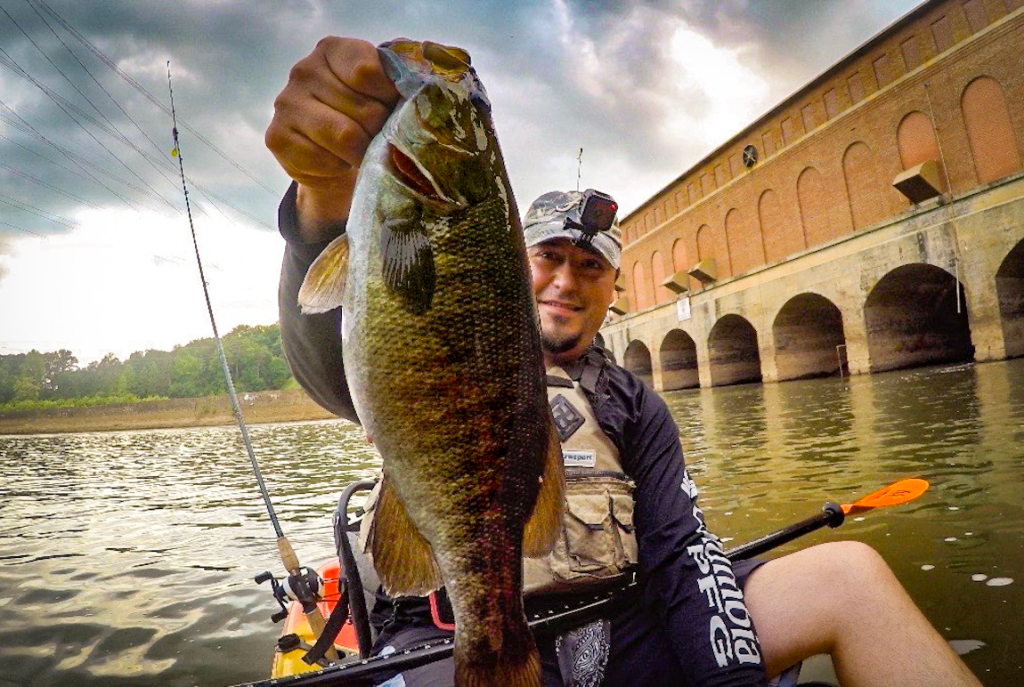
When I say I have spent a lifetime on the Chattahoochee, I mean that literally. I have fished it in every season, in every condition, at every access point from Buford Dam to the southern reaches of the metro corridor. I have floated it on tubes in the middle of August with a cooler and a crowd of friends. I have hiked its banks in November when the hardwoods are dropping their leaves and the whole river corridor turns gold and copper. I have stood in its current in the dark of a February morning, freezing, waiting for enough light to thread a fly onto a tippet, and thought there was absolutely nowhere else I would rather be.
I have seen this river at its best — clear and cold and full of fish after a string of low-flow days in the fall, the kind of conditions that make every cast feel like a possibility. I have also seen it at its worst — chocolate brown and blown out after heavy rains, full of trash and debris washed in from the surrounding city, a reminder of how much pressure this river absorbs from the millions of people who live in its watershed. I have watched it change over the decades in ways that are encouraging and in ways that keep me up at night. I have a complicated, deep, and permanent relationship with this river, and I would not trade it for anything.
Two Decades of Guiding
My guiding started the way most things like this start, informally and without a plan. Friends would ask me to take them fishing. I would show up, we would spend the day on the water, and they would catch fish and fall in love with the river the same way I had. Word spread. More people asked. Before long I was organizing regular trips, scouting access points, researching hatches and stocking schedules, and thinking carefully about how to put groups of people on the water in ways that were safe, productive, and respectful of the resource.
Over the years I have led trips for complete beginners who had never held a fishing rod, for experienced anglers who had fished all over the country but never explored their own backyard, for families with young children experiencing the river for the first time, and for serious kayak anglers who wanted to cover water efficiently and put fish in the kayak consistently. Every one of those experiences taught me something, either about the river itself, about how people connect with moving water, or about the particular kind of satisfaction that comes from watching someone catch their first trout on a river they did not know existed an hour from their front door.
Georgia Kayak Fishing and a Community Built Around This River
For many years I have been deeply involved with Georgia Kayak Fishing, the largest kayak fishing club in the state of Georgia. Serving on the club’s board of directors for more than a decade, I have had the privilege of planning, organizing, and leading well over eighty outdoor events for the club’s membership — trips that have taken Georgia anglers to rivers, lakes, and coastal waters across the state and beyond. Many of those events have been right here on the Chattahoochee, introducing club members to a river that is both immediately accessible and endlessly deep in what it offers to a kayak angler willing to put in the time to learn it.
Leading trips for a large, organized club is a different challenge than guiding a small group of friends. You are responsible for people of wildly varying skill levels, fitness levels, and experience on the water. You are managing logistics across multiple boats, multiple access points, and potentially challenging water conditions. You are also representing an organization that cares deeply about safety, ethics, and the conservation of the waters its members fish. Those responsibilities sharpened my skills as a guide and deepened my commitment to doing things the right way on this and every other river I have ever paddled.
The experience of leading those eighty-plus events also gave me something irreplaceable — a broad and detailed understanding of how people connect with the outdoors and what they need to have a successful and meaningful experience on the water. That understanding is one of the foundations this blog is built on.
Why I Built This Blog
The Chattahoochee River Trail is built on a simple but deeply felt conviction: most people who live within thirty miles of this river do not truly know it. They may have floated it on a tube. They may have walked its banks in the park. They may have driven over it on Interstate 285 or Georgia 400 without giving it a second thought. But they do not know its history, its ecology, its fishery, its access points, its seasonal rhythms, or the issues that threaten its health and future. And that lack of knowledge is, I believe, one of the most important reasons those threats continue to grow.
You cannot protect something you do not understand. You cannot fight for something you do not love. And it is very hard to love something you have never truly explored.
My goal with this blog is to change that, one reader at a time.
I am building this resource to help people understand what the Chattahoochee River actually is — not just the recreational amenity it represents on a sunny Saturday afternoon, but the complex, living, historically significant, ecologically vital waterway that has shaped this region for thousands of years. I want to explain where the river comes from, what Buford Dam and Lake Lanier mean for the five million people who depend on them, how the trout fishery was created and sustained, what the Chattahoochee River National Recreation Area is and why Jimmy Carter’s decision to establish it in 1978 was one of the most important conservation acts in Georgia history, and what is at stake right now for the health and future of this watershed.
I am also building this resource because too many people come to this river without the information they need to enjoy it safely and responsibly. The Chattahoochee tailwater is not a passive environment. Dam releases can raise water levels rapidly and without warning. Cold water creates hypothermia risks that most warm-weather visitors do not anticipate. Current in channels that look calm from the bank can be deceptively strong. Every year people get into serious trouble on this river because they did not know what they were dealing with, and every one of those incidents could have been prevented with the right information beforehand. I intend to provide that information as clearly and specifically as I can.
Beyond safety, I want to talk about responsible use — catch and release practices that keep the trout fishery healthy, leave-no-trace principles that keep the river corridor clean for the next visitor, wildlife viewing ethics that do not disturb the nesting birds and denning mammals that use the CRNRA as their home, and the simple courtesy of treating a shared public resource the way you would want it treated if it belonged to you. Because in a very real sense, it does.
The Issues That Keep Me Up at Night
This river faces real and serious threats, and I am not going to pretend otherwise on this blog or anywhere else. Water quality in the Chattahoochee watershed has improved significantly since the worst days of the 1960s and 1970s, when industrial and municipal discharge made the river a public health concern, but the pressure has not gone away. It has changed form.
Stormwater runoff from the impervious surfaces of one of the fastest-growing metropolitan areas in the country — parking lots, roads, rooftops, driveways — carries pollutants, sediment, and elevated water temperatures into the river system every time it rains. Litter from millions of recreational users accumulates along the banks and in the water, carried downstream from access points and picnic areas and neighborhoods throughout the watershed. Invasive species, both plant and animal, are altering the ecology of the river corridor in ways that are still being understood. Development pressure along the river’s banks threatens the riparian buffer zones that filter runoff and maintain the shaded, cool conditions that trout and other cold-water species depend on.
And then there is the ongoing water war — Georgia, Alabama, and Florida fighting over how much water Georgia is entitled to hold in Lake Lanier and how much must be released downstream to meet the needs of other states and federally protected species. The outcome of that long-running legal and political battle will shape this river’s future in ways that dwarf most other decisions being made about it right now.
I will cover all of these issues on this blog, not to be alarmist or political, but because an informed community of river users is the most powerful force available for protecting a resource like this one. Advocacy organizations, elected officials, and government agencies all have roles to play, but none of them can substitute for millions of people who know this river, love it, and refuse to let it be degraded without a fight.
Come Explore It With Me
Whether you are a seasoned fly angler who has been fishing the tailwater for twenty years and just wants a few new pieces of information, a complete newcomer who discovered the river last summer and wants to understand what you have stumbled into, a kayaker looking for access points and paddling routes, a hiker exploring the CRNRA’s trail system for the first time, a parent looking for ways to introduce your kids to the outdoors close to home, or simply someone who drives over this river twice a day and has always wondered what is actually going on down there — this blog is for you.
The Chattahoochee River is extraordinary. It is a cold-water trout fishery running through a city of six million people. It is a National Recreation Area with fifty miles of trails and fifteen park units accessible to anyone willing to walk through a parking lot gate. It is a wild corridor full of bald eagles and river otters and trophy brown trout swimming past the office towers of Buckhead. It is the water supply for the largest metropolitan area in the Deep South and the flood protection for the communities built along its banks. It is a cultural landmark, a conservation battleground, and on any given Saturday morning, the best place within fifty miles of Atlanta to stand in moving water and feel the week fall away.
I have been lucky enough to spend a lifetime learning this river. Now I want to spend the next chapter sharing what I know.
Welcome to the Chattahoochee River Trail.
— Nick Adams Atlanta Native & River Guide.