From Buford Dam to Cochran Shoals
A lot of people around Atlanta think of the Chattahoochee River as a cold-weather destination — a trout stream that gets busy in the fall and winter and then quiets down once the heat rolls in. I want to dispel that idea completely, because it could not be further from the truth. Summer on the Chattahoochee tailwater is its own kind of magnificent. The cold release from Buford Dam keeps the upper river refreshingly cool while the rest of the metro area is baking under a Georgia summer sky, and the full forty-eight-mile corridor from the dam down to Cochran Shoals offers more outdoor recreation options per square mile than almost anywhere else in the Southeast.
I have spent more summer mornings than I can count on this river in some form or fashion — rod in hand, paddle in the water, boots on a trail, or just sitting on a rock bar watching the current move past. The Chattahoochee in summer has a particular quality to it. The light comes through the hardwood canopy in long slanted beams over the water in the early morning. The river smells like cold stone and moving water and green things growing. The birds are loud and everywhere. And if you know where to go and how to do it right, the fishing, the paddling, and the hiking available on this stretch of river are genuinely world-class.
Here are the five activities I would put at the top of any summer list on the Chattahoochee tailwater between Buford Dam and Cochran Shoals. Do any one of them once and I promise you will be back for more.
NUMBER ONE: KAYAK FISHING THE TAILWATER
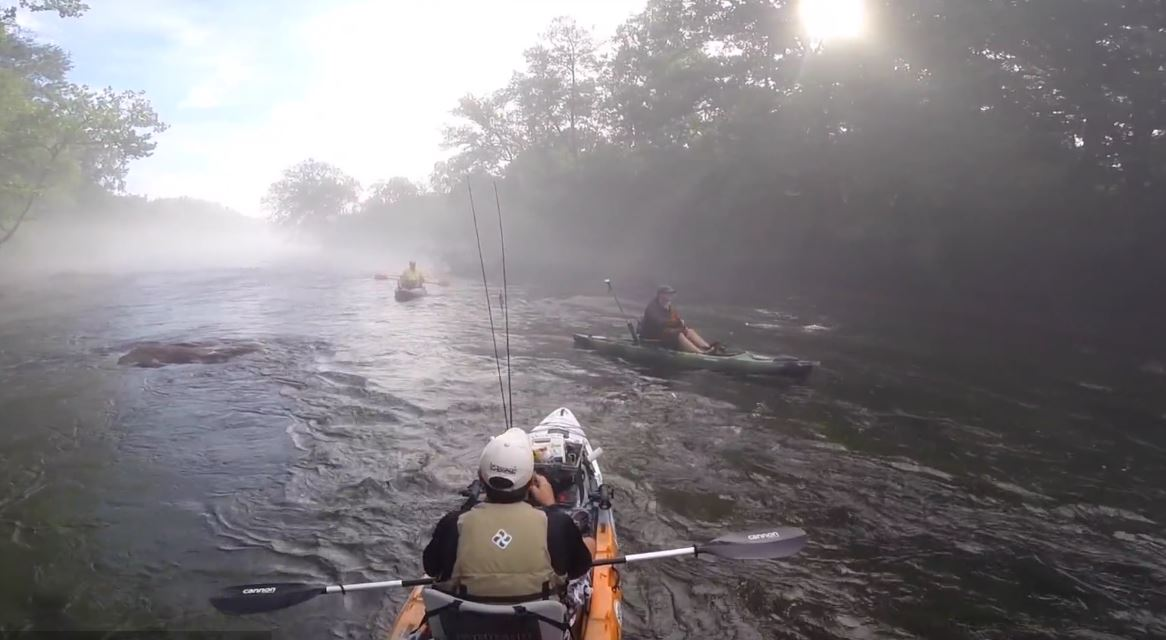
I have been kayak fishing since before most people knew what it was, and I have paddled fishing water across Georgia, the Southeast, and beyond. I keep coming back to the Chattahoochee tailwater because it offers something that almost no other water in this state can match — the ability to target multiple species of fish across distinctly different habitat types in a single float, in the middle of a metropolitan area, for free.
A summer kayak fishing float on the tailwater is one of the most versatile fishing experiences you will find anywhere near Atlanta. What you are targeting depends almost entirely on where you put in and where you take out.
In the upper tailwater from Buford Dam south through the Bowman’s Island section and down to Highway 20, you are in cold-water trout country even in summer. The water coming out of the dam holds in the low fifties through the hottest months of July and August, which means rainbow and brown trout are active and feeding even when every other trout stream in Georgia has cooked out. A kayak gives you access to water that wading anglers cannot reach — the deep seams along the channel edges, the far bank structure, and the mid-river pools that simply cannot be covered from the bank or by wading. You can cover two to three miles of prime trout water in a morning float that would take days on foot, and you do it quietly and without the pressure that high-bank wading creates on wary brown trout.
As you move south of Highway 20 and the river temperature begins to moderate slightly, the species mix shifts. Rainbow trout remain available throughout the mid-tailwater in summer, holding in the cooler, faster water and seeking out the coldest seams they can find. But you also begin to encounter bass — largemouth and spotted bass in the deeper pools and structure-laden bends, and as you approach the lower portions of the corridor near Island Ford and beyond, shoal bass start showing up in the rocky shoals and fast water that is their native habitat.
Shoal bass are one of the great undiscovered treasures of the Chattahoochee River corridor for a large percentage of Atlanta-area anglers, and I want to take a moment to tell you about them properly. These are a native Georgia species, endemic to the Chattahoochee drainage, and they are pound for pound one of the hardest-fighting freshwater fish in the state. They live in fast, rocky water — the kind of swift shoal sections that characterize the river from Roswell south through the Cochran Shoals area and beyond. They hit topwater lures with an aggression that will make a largemouth bass blush, and a twelve-inch shoal bass on light tackle feels like a fish twice its size. In the summer, when the water is up enough to push good flow through the rocky shoals, shoal bass fishing on the tailwater from a kayak is one of my absolute favorite ways to spend a morning.
For the kayak angler targeting trout in the upper tailwater, a light or medium-light rod with four to eight pound fluorocarbon and a selection of small inline spinners, micro-jigs, and small crankbaits will produce fish throughout the summer. For shoal bass and mixed-species fishing in the lower corridor, bump up to a medium action spinning setup with ten to twelve pound braid and a fluorocarbon leader, and bring topwater lures — poppers and walking baits — for the early morning when the bass are shallow, transitioning to swimbaits and creature baits fished along the rocky bottom as the day warms up.
Put in points for summer kayak fishing floats are abundant and well-maintained throughout the tailwater. Bowman’s Island below the dam, the Highway 20 access, Settles Bridge, McGinnis Ferry, Abbotts Bridge, Medlock Bridge, Jones Bridge, Island Ford, Azalea Park in Roswell, Morgan Falls, and the Powers Island launch at Cochran Shoals all provide options for customizing the length and character of your float. Day passes are required at National Park Service units but are inexpensive and well worth it. A five-dollar day pass gets you into as many park units as you can reach in a single day, and an annual pass costs forty dollars — a bargain if you are on this river as often as I am.
Always check the Buford Dam release schedule at 770-945-1466 before any kayak fishing float on the upper tailwater. A release catching you broadside in the upper channel is a very different experience in a kayak than it is on foot, and not a pleasant one. Know the schedule, plan your float around it, and always wear your PFD — required by federal law above Highway 20 and simply smart practice everywhere else on this river.
NUMBER TWO: TROUT FISHING FROM THE BANK AND BY WADING
Summer trout fishing on the Chattahoochee tailwater is a guilty pleasure I indulge as often as possible, and I want to share a simple truth that a lot of people seem to have missed: you can catch cold-water trout on this river in August. In August. In Georgia. While the rest of the state is too hot for trout to survive outside of a mountain stream, the Chattahoochee tailwater is pumping fifty-degree water out of the bottom of Lake Lanier every single day, keeping a fishable cold-water zone extending several miles below the dam throughout the entire summer.
The upper tailwater from Buford Dam south to approximately Settles Bridge is the sweet spot for summer trout fishing. This is the section where the water is consistently coldest, and where the combination of stocked rainbow trout, holdover rainbows, and wild brown trout gives you multiple fishing options in a single stretch of river.
The fishing from the bank is accessible to anyone, regardless of experience level. The parking area at the Lower Pool below the dam, the Bowman’s Island access off Trout Place Road, and the Highway 20 Bridge access all provide straightforward bank access to productive trout water. You do not need waders, you do not need a kayak, and you do not need to be an experienced fly fisherman to catch trout here in summer. A basic spinning rod with light line, a small inline spinner or a small split-shot rig with a single hook, and you have everything you need to catch fish.
For those willing to wade, the Bowman’s Island section opens up enormously. The river braids here and becomes shallower and more accessible, and the angler who takes the twenty-minute walk along the Bowman’s Island Trail to reach the water behind the hatchery finds far less competition and far more catchable water than the anglers concentrated at the parking area.
Summer wading below the dam requires a few specific adjustments. The water is cold enough to require waders even on a ninety-degree day unless you are specifically wade-fishing in shorts and are prepared for a significant cold shock below the waist. I have done both and the waders are dramatically more comfortable for extended time in the river. The rocks in this section are slick year-round — felt-soled wading boots and a wading staff are not optional accessories on the upper tailwater, they are essential equipment.
One summer-specific consideration that every trout angler on this river needs to understand is the afternoon generation schedule. The Corps of Engineers runs peak power generation on weekday afternoons throughout the year, but in summer, when electricity demand from air conditioning loads peaks across the metro Atlanta grid, the releases are reliable and predictable. This actually works in the angler’s favor. Fish the early morning hours when flows are typically at their lowest and most stable, catch your fish in the best conditions of the day, and be off the water well before the afternoon generation kicks in. The window from first light until around noon is the prime summer trout fishing window on the upper tailwater, and it is a genuinely exceptional window.
In summer, the technical fly fishing game simplifies slightly compared to fall and winter. The midge hatch that dominates the upper tailwater in cold weather is still present but compressed into the cooler parts of the day — early morning and occasionally in the evening after the water settles following a generation release. Small nymphs under an indicator remain the most reliable producer through the summer months. Terrestrial patterns — black ants, small beetles, and even small hoppers in the lower tailwater sections — become productive options in the mid-tailwater from Highway 20 south through Settles Bridge, where the insect diversity increases and trout have more to eat at the surface.
The daily stocking report from Georgia DNR is your most valuable planning tool for summer trout fishing. A stocking that happened two or three days before your visit means fish that have settled into the river and are actively feeding but have not yet been subjected to days of heavy pressure. That window produces some of the most consistent action of the entire year.
NUMBER THREE: SHOOTING THE HOOCH — TUBING AND FLOATING
If there is one activity that defines the Chattahoochee River experience for a huge percentage of metro Atlanta residents, it is shooting the hooch. Putting a tube in the river on a hot summer afternoon, cracking a cold beverage, and letting the current carry you through shaded river corridor while the rest of the city swelters is one of those quintessentially Atlanta experiences that never gets old. I have done it hundreds of times and I still look forward to it every summer.
The primary tubing corridor on the tailwater runs from roughly Jones Bridge south through Island Ford, Azalea Park, Morgan Falls, and down through the Powers Island and Cochran Shoals area. This section of the river flows at a pace that is perfect for tubing — fast enough to keep you moving without any effort, slow enough that you are not fighting heavy current or nervous about the Class II water further south in the Palisades. The scenery through this corridor is genuinely beautiful. The river is wide and clear in low-flow conditions, lined with sycamores, tulip poplars, and river birches that lean out over the water and create a canopied tunnel effect in the middle stretches. Wildlife sightings — herons, kingfishers, turtles, and the occasional osprey overhead — are common enough that you never have to pretend you are not looking for them.
Several outfitters operate along the tailwater corridor and offer tube rentals, shuttle services, and gear for floating the river. They handle the logistics of getting you from put-in to take-out without requiring you to have two cars or figure out the shuttle yourself. For first-timers especially, using an outfitter simplifies the experience enormously. The outfitters who have been on this river for years also know the current conditions, the release schedule, and any stretch-specific concerns that are worth knowing about before you get on the water.
Powers Island at the Cochran Shoals unit is one of the best put-in points for a half-day float through the lower tailwater corridor. The launch here drops you into a section of river that flows past the historic Powers Island itself — a narrow, forested island that has been a landmark on this river since James Powers ran a ferry across the Chattahoochee here in 1835, and where Union troops crossed during Sherman’s march on Atlanta in July of 1864. There is more history per river mile in this corridor than most people realize, and a slow tube float is one of the best ways to absorb it.
A few tubing guidelines I give everyone I take on this river for the first time. First, wear a PFD. I know it feels unnecessary on a lazy float, but the river can change character quickly, particularly around shoals, underwater structure, and following generation releases from the dam. The sections of the tailwater that are calm and easy in normal conditions can become significantly more challenging when the water comes up. A life jacket is not a statement about your swimming ability. It is insurance against the unexpected. Second, bring sunscreen and apply it generously before you get on the water. The combination of direct sun and reflected sunlight off the water surface will burn you faster than almost any other outdoor environment, and you will not notice it until you are already red. Third, pack out everything you bring in. The Chattahoochee corridor is a national park. Leave it exactly as you found it.
The best summer tubing experience on the tailwater is an early start on a weekday. Beat the weekend crowds, get the freshest water temperatures of the day, and enjoy two or three hours on the river before the afternoon crowds and generation releases change the conditions.
NUMBER FOUR: HIKING AND TRAIL RUNNING THE RIVER CORRIDOR
I have logged more miles on the trails of the Chattahoochee River National Recreation Area than I could ever accurately count. I know this trail system the way I know the river itself — intimately, in every season, in every weather condition. And I want to tell you that a summer morning on the Chattahoochee river trails is one of the most underrated outdoor experiences available to anyone living within fifty miles of Atlanta.
The trail system within the CRNRA between Buford Dam and Cochran Shoals comprises dozens of miles of maintained paths ranging from wide, level gravel fitness loops to narrow, technical single-track that climbs bluffs and delivers you to elevated river overlooks that most visitors never find. The river corridor keeps the trails noticeably cooler than surrounding areas on summer mornings, partly due to the cold water temperature moderating the air near the river and partly due to the dense, mature hardwood canopy that shades most of the trail network through the hottest months of the year.
Starting at the northern end of the corridor, the Bowman’s Island Trail at the Buford Trout Hatchery access is a pleasant and productive hiking and fishing access route that parallels the river through the Forsyth County bottomland below the dam. This trail puts you in contact with the river repeatedly along its length and serves double duty as fishing access and a legitimate nature walk through one of the most ecologically rich sections of the upper tailwater corridor.
Further south, the Jones Bridge unit offers a network of trails along both banks of the river through a section where the Chattahoochee widens and slows into broad, shoally flats. The walking here is easy and the river views are consistently rewarding. This is a trail system that works for everyone from young children to older adults, and it sees heavy use from the Alpharetta and Johns Creek communities on weekends for good reason.
The Island Ford unit in Sandy Springs is home to the park’s primary visitor center and offers the longest trail network in the northern portion of the CRNRA. At over six miles of connected trail, the Island Ford system includes a southern extension that takes you to the river in a section of bottomland hardwood forest that has a genuinely wild feel despite being a short drive from the Perimeter highway. The Island Ford Shoals stretch of the river is accessible from these trails and is worth seeing even if you are not fishing.
The Cochran Shoals unit at the southern end of this corridor is the most intensively used trail network in the entire CRNRA and, by some measures, one of the most heavily trafficked trail systems in the entire National Park Service per acre. The Cochran Shoals fitness loop — a flat, wide, nearly four-mile gravel path that circles through the unit’s interior wetlands, river banks, and open grasslands — draws hundreds of runners, walkers, and cyclists every weekend morning. What makes it exceptional is not the technical challenge but the scenery. The trail parallels the Chattahoochee through the angular rocky shoals that give the unit its name, passes through boardwalk sections over wetland marsh where wading birds hunt in the shallows, and offers long open views down the river that remind you why people chose to live near this water for thousands of years.
For runners, the Cochran Shoals outer loop is one of the premier five-kilometer training routes in metro Atlanta. Running it in the early morning before the summer heat builds, with the river running cold beside you and birds calling in the canopy overhead, is an experience that keeps people coming back week after week for years. I have run it dozens of times and it never feels routine.
Mountain biking is allowed in the Cochran Shoals and Palisades units of the CRNRA, and the seven miles of trails open to bikes in that corridor offer terrain suitable for riders of all levels. The Cochran Shoals fitness loop accommodates casual cyclists easily, while the connecting trail networks toward the Palisades sections offer more technical terrain for experienced riders looking for something that requires actual bike handling rather than just pedaling.
The practical advice for summer hiking on this trail system is simple. Start early. The trails within the tree canopy stay reasonably comfortable well into mid-morning even in July and August, but the open sections can become genuinely hot by late morning. Bring more water than you think you need. Wear insect repellent — the bottomland sections near the river support significant mosquito populations in summer, particularly after rain events. And pay the park pass fee at the self-service kiosk when you enter. The money goes directly to trail maintenance and habitat restoration, and it is one of the best five dollars you will spend all summer.
NUMBER FIVE: WILDLIFE WATCHING AND NATURE PHOTOGRAPHY
This one might surprise some people coming to a recreation guide for the Chattahoochee tailwater, but wildlife watching and nature photography on this river corridor in summer is genuinely extraordinary, and it is an activity that does not require any special skills, equipment, or physical fitness. All it requires is patience and the willingness to slow down and pay attention to what is happening around you.
The Chattahoochee River corridor between Buford Dam and Cochran Shoals functions as a wildlife refuge running through the middle of one of the fastest-growing metropolitan areas in the country. The river itself is a highway for wildlife movement. The forested banks provide nesting habitat, feeding habitat, and cover for an extraordinary variety of species that most people who live within thirty minutes of this river have never seen and do not know exist here.
Let me tell you some of what you are likely to encounter if you spend time on this corridor in summer with your eyes open.
Bald eagles nest along this river and are increasingly common throughout the entire tailwater corridor. In the early morning, you can sometimes watch a bald eagle perched in a riverside sycamore scanning the water for trout. I have seen them strike the river and come up with a rainbow trout in their talons not twenty feet from where I was fishing. That is not a wilderness experience. That is happening thirty miles north of downtown Atlanta, and it happens regularly.
Osprey are even more commonly encountered than eagles. These fish hawks are expert hunters and spectacular to watch in action, hovering thirty feet above the river on beating wings before folding and diving straight down into the water in a trajectory that looks fatal. They pull up at the last second, hit the surface feet-first, and come away with fish more often than they miss. I have watched osprey fish the tailwater for years and I never get tired of it.
Great blue herons are a constant presence on this river. They stand motionless in the shallows for twenty or thirty minutes at a stretch, then strike with a speed that is startling given how patient they appear. Green herons — smaller, more secretive, and in my opinion one of the most beautiful birds on this river — hunt the brushy bank edges and overhanging limbs. In the early morning mist over the water, a green heron perched on a half-submerged log is a photograph worth getting up early for.
The wood duck population along the tailwater is robust. Summer mornings often start with the sound of wood ducks calling from the river before first light, and as you move quietly along the water you will regularly flush pairs of them from the slack-water pockets behind root masses and log jams. Belted kingfishers rattle their mechanical call from exposed perches along the entire length of the corridor and dive repeatedly for small fish throughout the morning hours.
River otters have made a strong comeback in the Chattahoochee corridor and are now regularly seen in the upper tailwater section and throughout the Cochran Shoals unit. Otters are fast, curious, and completely unconcerned with human observers who stay still and quiet. I have had otters surface and stare at me from fifteen feet away while I was standing mid-river, apparently trying to decide whether I was interesting or just large and strange. They decided on the latter and dove, and I stood there grinning like an idiot.
Beaver are present throughout the bottomland sections of the river, and their work — dammed side channels, gnawed stumps, mud-slide banks — is visible at most access points if you look for it. White-tailed deer are common enough along the trails that sightings on a morning hike are nearly guaranteed.
For photography, the golden hour in summer on the Chattahoochee tailwater is genuinely stunning. The combination of cold river mist, warm morning light filtering through the canopy, and the abundance of wildlife concentrated along the water’s edge creates photographic opportunities that rival what you would find in many dedicated wildlife refuges. A basic camera — even a modern smartphone camera with a good lens — is sufficient for the bird photography and landscape work this river invites. For serious wildlife photography of osprey, eagles, and kingfishers in action, a longer lens and patience are the primary requirements.
The best wildlife watching access points along the tailwater corridor are the Bowman’s Island area for the upper river, the Jones Bridge unit for the mid-tailwater, the Vickery Creek unit in Roswell for a mix of river and creek wildlife in a particularly scenic setting, the Powers Island area for open river birds and the quieter east bank experience, and the Cochran Shoals boardwalk sections for wetland birds in a marsh environment that is unique along the entire tailwater. Any of these locations visited in the first hour after sunrise on a clear summer morning will give you more wildlife encounters in a short walk than most dedicated wildlife trips produce.
A Final Word About Summer on the ‘Hooch
I said at the beginning that a lot of people think of the Chattahoochee tailwater as a cold-weather destination and miss what summer has to offer here. I hope the five activities I have laid out make the case clearly. This river corridor from Buford Dam to Cochran Shoals is one of the finest accessible outdoor recreation resources in the American South, and it operates at full capacity in every season, including the sweltering Georgia summer.
The cold release from the dam is the key to all of it. That fifty-degree water makes trout fishing possible in August. It makes the upper tailwater noticeably cooler than the surrounding city on a ninety-degree afternoon. It keeps the river corridor feeling like a different world from the parking lot you walked through to get to it.
Get on the water early, check the release schedule every time, wear your PFD above Highway 20, and take care of this resource the way it deserves to be taken care of. It belongs to all of us, and it is magnificent.
Leave a Reply